
 Short Answer: Lab-grown diamonds offer stunning sparkle, modern appeal, and strong value for many couples. Natural diamonds deliver rarity, heritage, and long-term market stability. Your choice depends on what matters most—beauty, budget, symbolism, or investment.
What You’ll Learn
- What lab-grown diamonds actually are
- How labs create diamonds compared to nature
- Pros, cons, and real value differences
- How experts tell them apart (and why you should care)
What Lab-Grown Diamonds Are
Lab-grown diamonds are real diamonds—same crystal structure, same hardness, same fire, same brilliance. They’re not simulants like cubic zirconia or moissanite. They’re carbon crystals grown under controlled conditions to duplicate nature’s process.
You see:
- Same sparkle
- Same durability
- Same beauty on the hand
Every gemologist evaluates them using the same tools and grading standards as natural diamonds.
How They’re Made vs. Natural Diamonds
Natural Diamonds
- Form deep in Earth’s mantle
- Grow over billions of years
- Rise closer to the surface through volcanic activity
- Mined, cut, polished, and graded
- Valued for rarity and geological history
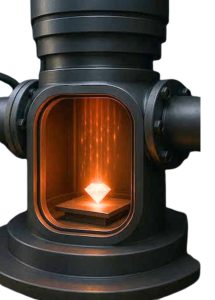 Lab-Grown Diamonds
Two primary methods create them:
HPHT (High Pressure High Temperature)
A machine compresses carbon under extreme heat and pressure until a diamond crystal forms—similar to Earth’s natural forces.

CVD (Chemical Vapor Deposition)
A carbon-rich gas breaks down in a chamber and layers onto a small diamond “seed,” building clean, modern crystals.
These technologies produce diamonds quickly—weeks or months instead of eons.
Pros, Cons, and Value Differences
Pros of Lab-Grown Diamonds
- Lower price — often 70–90% less than comparable natural stones
- Beautiful appearance — bright, brilliant, and eye-clean
- Larger sizes for the same budget
- Excellent for custom design clients who want bold centerpieces
- Consistent quality and fewer visible inclusions
Cons of Lab-Grown Diamonds
- Resale value significantly lower
(Market prices continue to decline as production increases.) - Not considered rare — they can be made as needed
- Less emotional appeal for buyers who value rarity and uniqueness
- Insurance replacement differences as prices changes over time
Value Differences
Natural diamonds carry long-term market stability due to rarity.
Lab-grown diamonds deliver maximum size and sparkle at a far lower price, but with currently nonexistent resale or trade-in options.
It all depends on what you value most:
- Romance of rarity? Natural.
- Size, sparkle, and affordability? Lab-grown.
How to Tell the Difference (and Why It Matters)
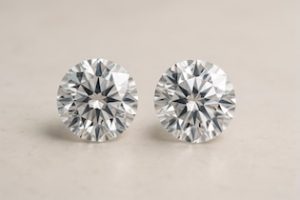
Lab diamond and mined diamond, can you see the difference?
You cannot tell the difference with your eyes. Even jewelers often can’t without specialized instruments. Identification matters for accurate pricing, ethical selling, and proper insurance coverage.
Gemologists use:
- UV fluorescence patterns
- Phosphorescence response
- Advanced spectroscopy
- Inclusion types unique to HPHT/CVD growth
GIA recently simplified the grading reports of Lab diamonds with more general grade, not individual qualities, because Lab diamonds are so consistently high color and clarity.
GIA, IGI, and GCAL laser-inscribe lab-grown diamonds and issue separate grading reports to ensure clarity and transparency for buyers.
Why it matters:
- Honest representation
- Correct valuation
- Proper documentation for insurance
- Long-term peace of mind about what you purchased
Final Thoughts
Lab-grown diamonds deliver bold beauty and big sparkle for the modern, savvy couple. Natural diamonds offer lasting value, tradition, and the timeless magic of rarity. Both make gorgeous engagement rings. Your priorities guide the choice.
If you want help comparing diamonds side-by-side or choosing the perfect stone for a custom Peter Indorf Designs ring, I’m here to help you celebrate your moment.
FAQs
Are lab-grown diamonds real diamonds?
Yes. They’re chemically and physically identical to natural diamonds.
Do lab-grown diamonds hold value?
Resale value is much lower and continues to decline as production grows.
Will people know if my diamond is lab-grown?
No one can tell by looking. Identification requires specialized equipment.
Are lab-grown diamonds good for engagement rings?
Absolutely—they’re durable, brilliant, and offer excellent beauty for the price.
Can lab-grown diamonds be insured?
Yes, with proper documentation and grading reports.
 Peter D. Indorf, GG, RGA
321-914-0118 / PeterIndorf.com
Registered Gemologist Appraiser – United States Gemological Institute (USGI)
Certified Member of:
National Association of Jewelry Appraisers (NAJA)
Accredited Gemologist Association (ASG)
American Gem Trade Association (AGTA)